
He for She: Promoting Equality Through Community Engagement and Cultural Exchange
- Artemis Women's Power Association

- Dec 29, 2023
- 2 min read


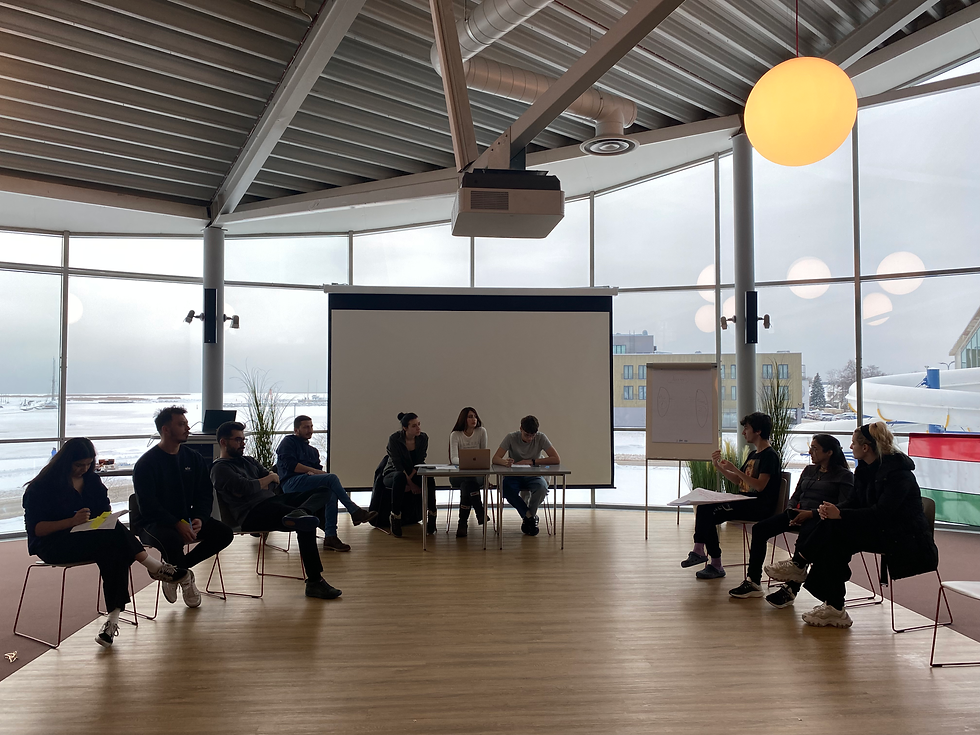
He for She was an Erasmus+ Youth Exchange project organized by Artemis Women's Power MTÜ under project number 2023-1-EE01-KA152-YOU-000113609. The project took place in Saaremaa, Estonia, from 9 December to 16 December 2023, bringing together participants from Bulgaria, Estonia, Hungary, Romania, and Turkey. Through community-based activities, intercultural dialogue, and non-formal education, the project encouraged young people to challenge gender stereotypes, promote equality, and strengthen cooperation across different cultures.
Participants actively engaged with local stakeholders and explored the city to gain a deeper understanding of Estonian society and culture. These visits encouraged intercultural dialogue while providing opportunities to introduce the Erasmus+ Programme to local communities. A public challenge activity, in which female participants demonstrated their gaming skills alongside local young people, highlighted that abilities are determined by practice and dedication rather than gender. This experience encouraged participants to question stereotypes and recognize the importance of equal opportunities in every field.
The project also promoted awareness of women's historical achievements through interactive surveys conducted with local students and residents. Participants invited members of the community to identify influential Estonian women and reflect on the contributions of female role models whose achievements are often overlooked. These conversations encouraged curiosity, inspired further learning, and demonstrated how public engagement can raise awareness of gender equality while strengthening communication and empathy skills.
Community interaction continued through a city tour combined with educational outreach activities. Participants organized information stands, communicated with local people about the Erasmus+ Programme, invited residents to future project events, and involved them in interactive games and team activities. These experiences strengthened participants' teamwork, leadership, intercultural communication, and confidence while creating meaningful connections between international participants and the local community.
Continuous reflection ensured that participants evaluated their learning outcomes and considered how to apply their experiences beyond the project. Leader meetings supported the improvement of project quality through collaborative problem-solving, while the Hungarian Cultural Night celebrated cultural diversity through traditional music, dances, language, food, and customs. Together, these activities reinforced mutual respect, reduced prejudices, and demonstrated how intercultural cooperation and community participation can contribute to building more inclusive and equal societies.


